














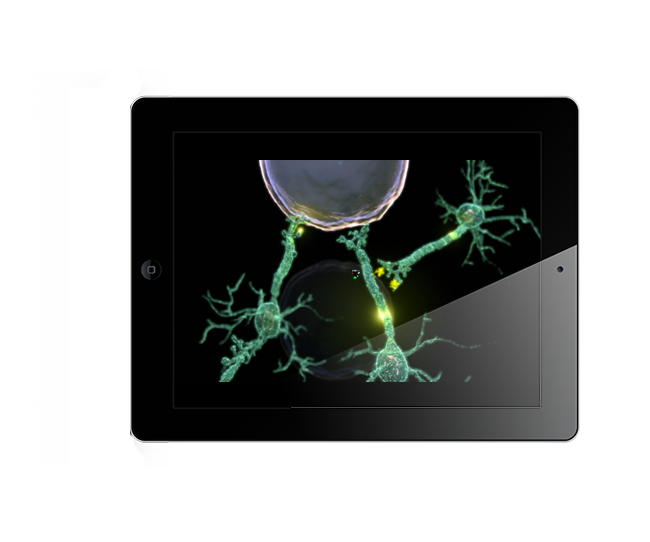



Study Identifies Molecular Mechanism Triggering Parkinson's DiseaseScientists at the Stanford University School of Medicine have identified a molecular pathway responsible for the death of key nerve cells whose loss causes Parkinson's disease. This discovery not only may explain how a genetic mutation linked to Parkinson's causes the cells' death, but could also open the door to new therapeutic approaches for the malady...
Envoy To Seek New Parkinson's Disease Therapy With ScrippsEnvoy Therapeutics Inc., a recently formed drug discovery company, announced that it has begun a research collaboration with The Scripps Research Institute to identify new drugs for Parkinson's disease (PD) that have greater efficacy and safety compared to current therapies...
Helping Neurons Fix Themselves In Parkinson's Patients A Michigan State University researcher is working to uncover how a protein known as parkin may help nerve cells fight off damage from Parkinson's disease, a strategy that could lead to new therapies for the degenerative ailment...
The Neurons That Tell You To QuitThe basal ganglia is a series of highly connected brain areas localised deep in the cerebral cortex that recently has attracted interest of neuroscientists when it was linked to learning, and discovered to be affected in a number of disorders of the addictive and obsessive spectrum, but also in Parkinson's disease (PD)...
Every Action Has A Beginning And An End (And It's All In Your Brain)Rui Costa, Principal Investigator of the Champalimaud Neuroscience Programme at the Instituto Gulbenkian de Ciência (Portugal), and Xin Jin, of the National Institute on Alcohol Abuse and Alcoholism, National Institutes of Health (USA), describe in the latest issue of the journal Nature, that the activity of certain neurons in the brain can signal the initiation and terminatio...
New Findings On Troubling Side Effects Of Parkinson's MedicationOne in every 100 elderly people suffers from Parkinson's disease, a disease of the nervous system with symptoms including stiffness and shaking. The standard medication used to treat Parkinson's is Levodopa, a drug that initially has major benefits but can later also produce serious side effects in the form of involuntary, jerky movements...
Focus On Gait Disorders And Falls In Parkinson's DiseaseMany of the symptoms of Parkinson disease can be alleviated with drugs that target dompamine, a chemical in the brain that is involved in nerve cell communication and therefore known as a neurotransmitter. However, such drugs do not improve the gait disorders and falls that commonly affect individuals with severe and advanced forms of Parkinson disease...
Parkinson's Patients More Likely To Stick With Certain 'Add-On' DrugsOf the three main types of oral drugs commonly added to levodopa therapy for patients with advanced Parkinson's disease, one might be the most effective, according to a new review. People with Parkinson's disease often initially experience tremors, stiffness, slowed movement or difficulty with balance and coordination...
Breaching The Blood/Brain Barrier To Improve Treatment For Neurodegenerative DiseasesThe University of South Florida's Department of Neurosurgery and Brain Repair has been granted a patent for a cell transplantation procedure combining human umbilical cord blood (HUCB) cells and a sugar-alcohol compound called "mannitol" that may make a big difference in treating life-threatening neurodegenerative diseases such as Alzheimer's disease, Parkinson's disease, multi...